
SUBSIDY · 5 MIN READ
How net-metering works in India, and how it lowers your bill
What a net-meter does, how export and import units are settled on your bill, how long approval takes and what documents your DISCOM needs.
By GR Enterprises Engineering Team ·
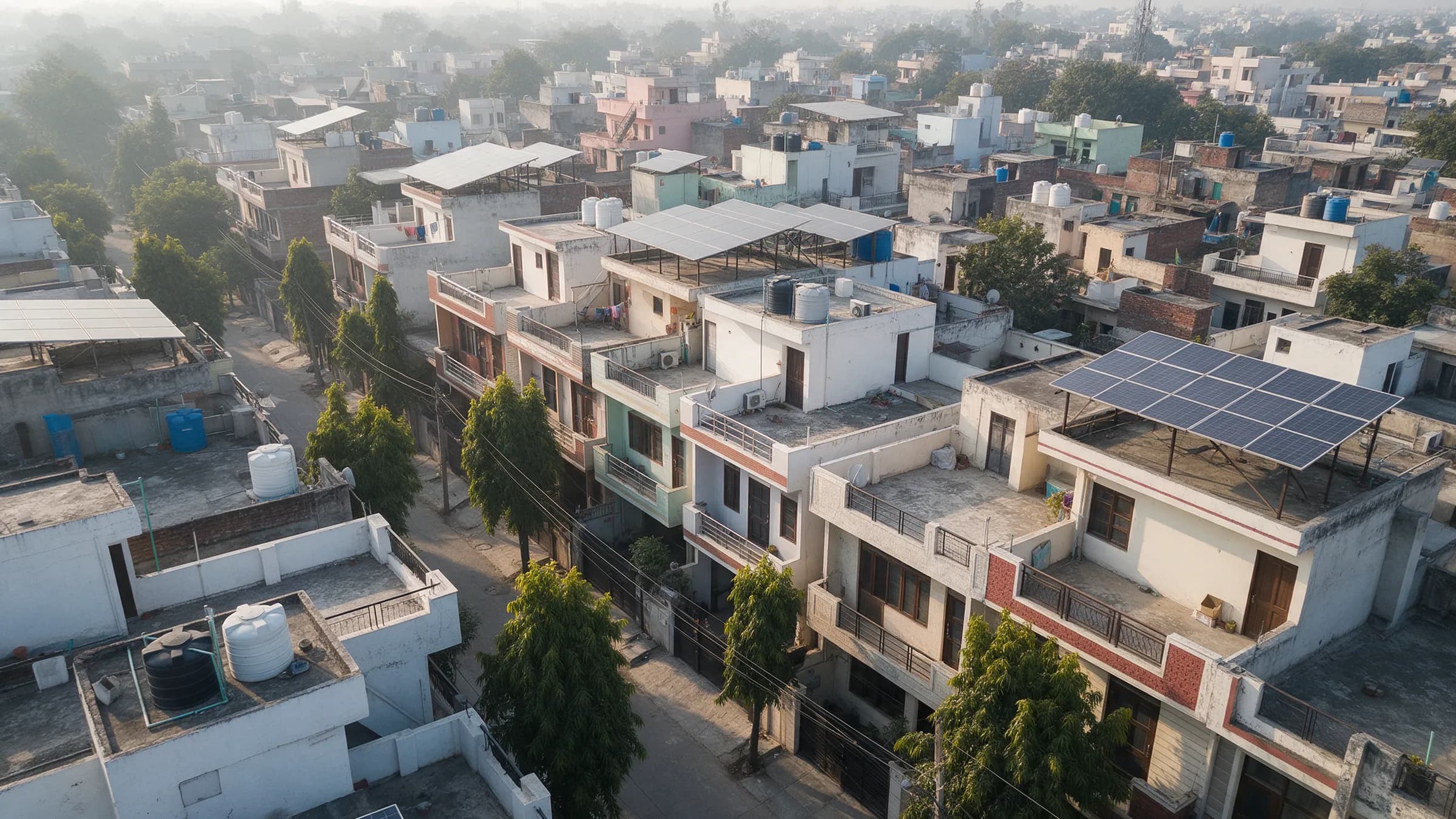
Net-metering is what makes rooftop solar so cost-effective for homes in Haryana. It turns your local electricity grid (DHBVN or UHBVN) into a free "battery" for your extra daytime solar units.
What a net-meter does
A net-meter is a bidirectional meter installed by your DISCOM in place of your standard meter. It records two numbers separately:
- Import: units you draw from the grid (mostly at night or during heavy winter fog)
- Export: surplus solar units you send to the grid (mostly during bright midday hours)
At the end of each billing cycle, you pay for import minus export. If you exported more than you imported, the surplus units are credited to your account and rolled over, slashing your monthly bill by up to 90%. Learn more in our On-Grid Solar Net-Metering Guide.
A worked example
Say your 3 kW rooftop solar system generates 380 units in a typical Haryana summer month:
- 220 units are used directly in your home during the daytime (powering ACs, fans, and appliances)
- 160 surplus units are exported into the DISCOM grid
- At night you import 200 units from the grid
Your net bill is calculated on 200 − 160 = 40 units, plus nominal fixed charges. Without solar, you would have paid for 420 units at peak residential tariffs. You can calculate your exact numbers on our Interactive Solar Calculator.
How long does approval take in Haryana?
Typically 2–4 weeks, depending on your local sub-divisional office:
- Online application on the National Solar Portal with your electricity consumer account number
- Technical feasibility check and load sanction by DHBVN or UHBVN
- Installation of Tier-1 DCR-compliant solar modules by GR Enterprises
- DISCOM inspection and bidirectional net-meter testing & installation
- Official commissioning certificate issuance (which triggers your ₹78,000 PM Surya Ghar DBT subsidy)
Documents required for net-metering
- Latest DHBVN or UHBVN electricity bill (with matching name & address)
- Property ownership proof or registry copy
- Homeowner's Aadhaar card and PAN card
- Cancelled bank cheque (for direct subsidy transfer)
- Technical specification sheet and installer's MNRE empanelment certificate
As an MNRE empanelled channel partner, GR Enterprises files your complete net-metering application, coordinates with the local junior engineer, and follows up until your bidirectional meter is installed and commissioned.