
CAPEX
Highest ROIBest for: Businesses that want the maximum lifetime savings and the tax benefits.
- You own the plant from day one
- Accelerated depreciation benefit*
- Payback in about 3–4 years
- 20+ years of near-free power after payback
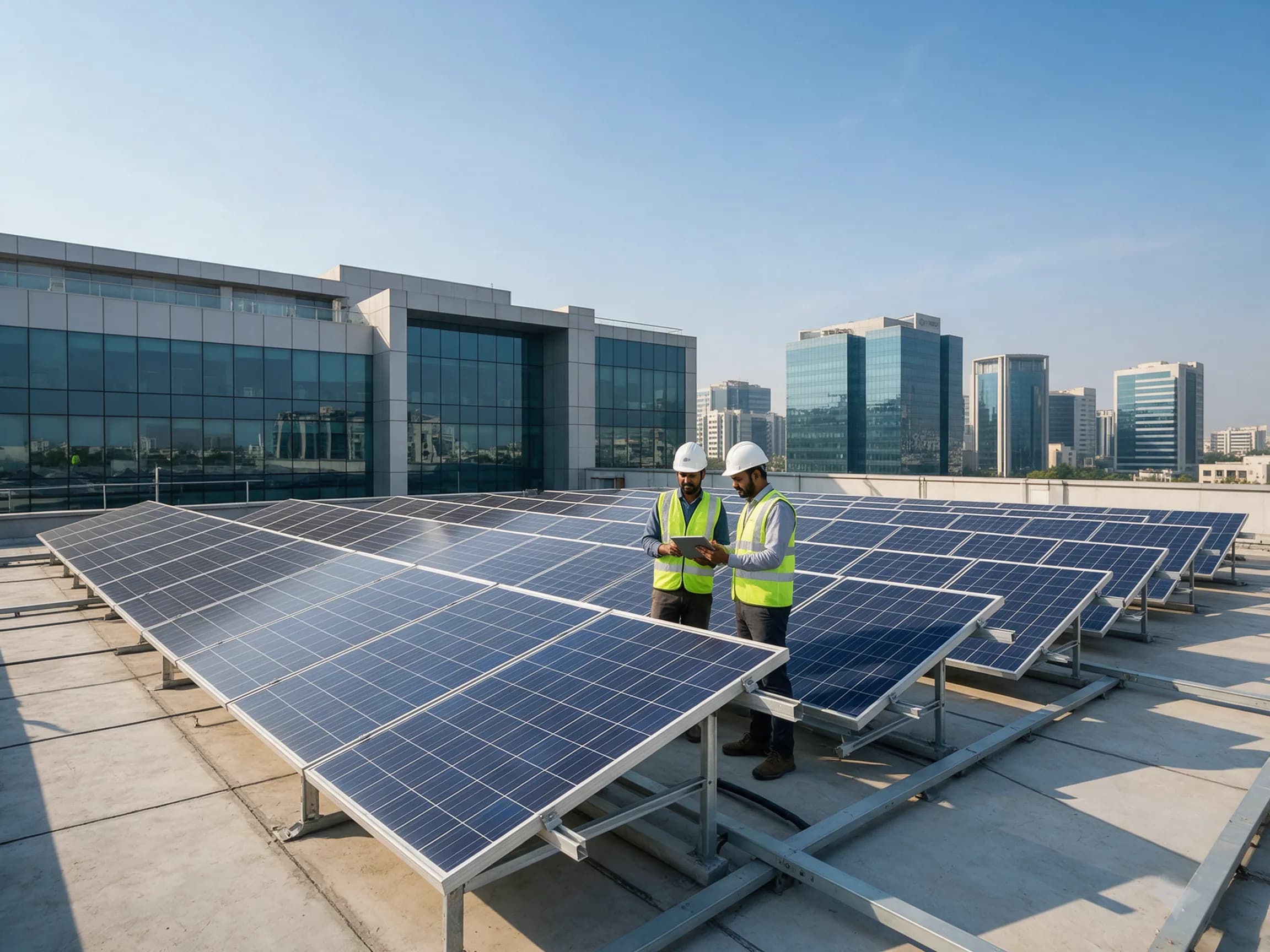
Solar for business · B2B
Share your details and an engineer will prepare a site-specific techno-commercial proposal.
Sectors we serve
Peak AC and IT loads line up with peak solar hours, so most of the generation is used directly on site.
Around-the-clock loads with hybrid backup options for critical equipment.
Large roofs and daytime use. Solar also gives students a live sustainability lesson.
Cut one of your largest operating costs, and add solar water heating where it makes sense.
Lower the cost per square foot and show customers your green credentials.
Large, unshaded roofs make for fast-payback plants of 100 kW and above.
Financing models
Best for: Businesses that want the maximum lifetime savings and the tax benefits.
Best for: Businesses that want ownership without a large upfront payment.
Best for: Larger loads (100 kW+) that prefer OPEX over CAPEX.
Move the slider to match your average monthly power bill and instantly see your recommended system size, subsidy, and lifetime returns.
60kW
5,400 sq ft
Module Count109 × 550 W
+ 49 MORE MODULES IN CAD LAYOUT
*Eligible under Section 32 of Income Tax Act for commercial tax depreciation.
Turnkey Engineering Protocol
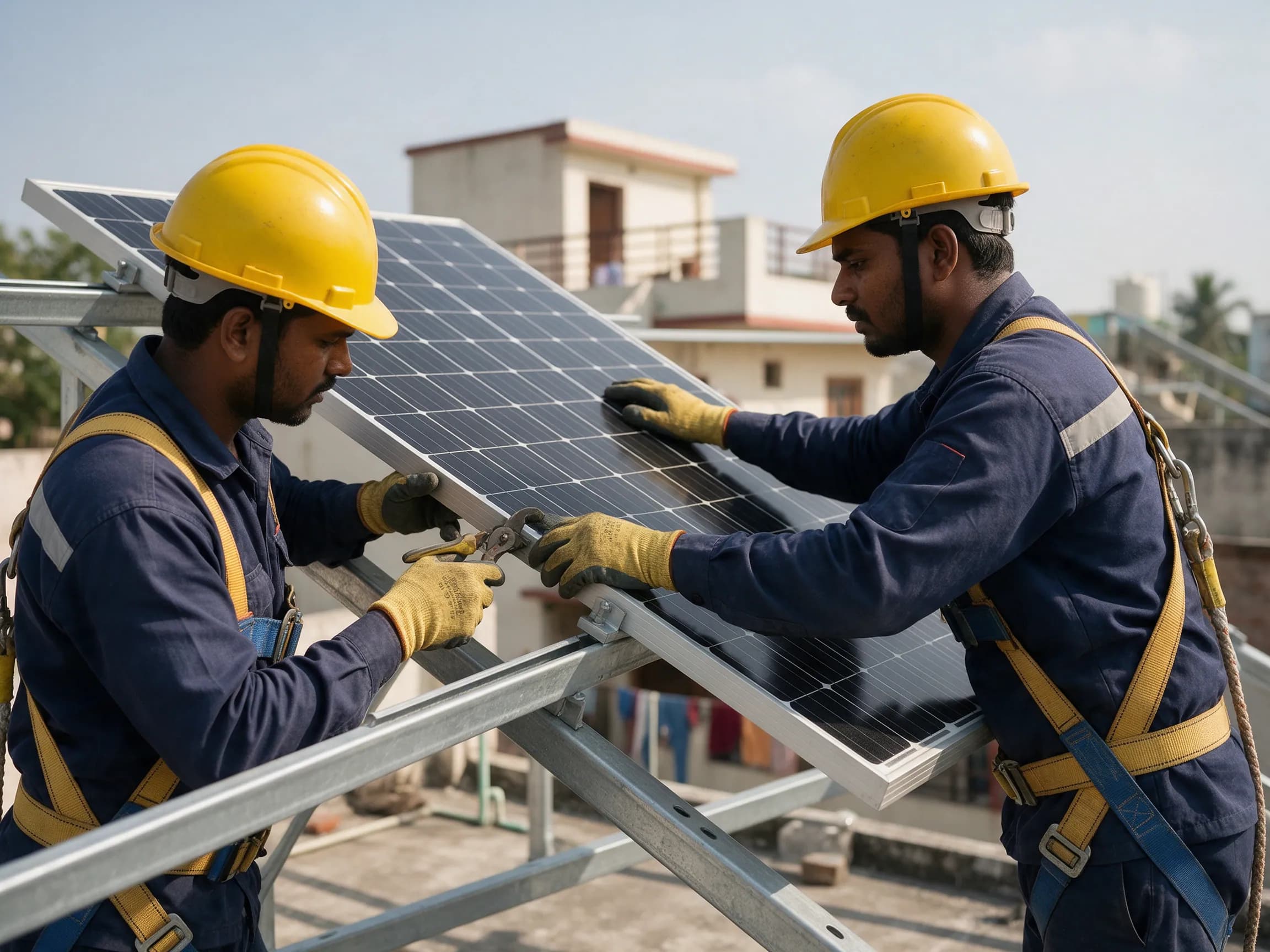
Every installation follows strict MNRE guidelines with zero-leakage chemical anchoring and certified wind-speed structures.
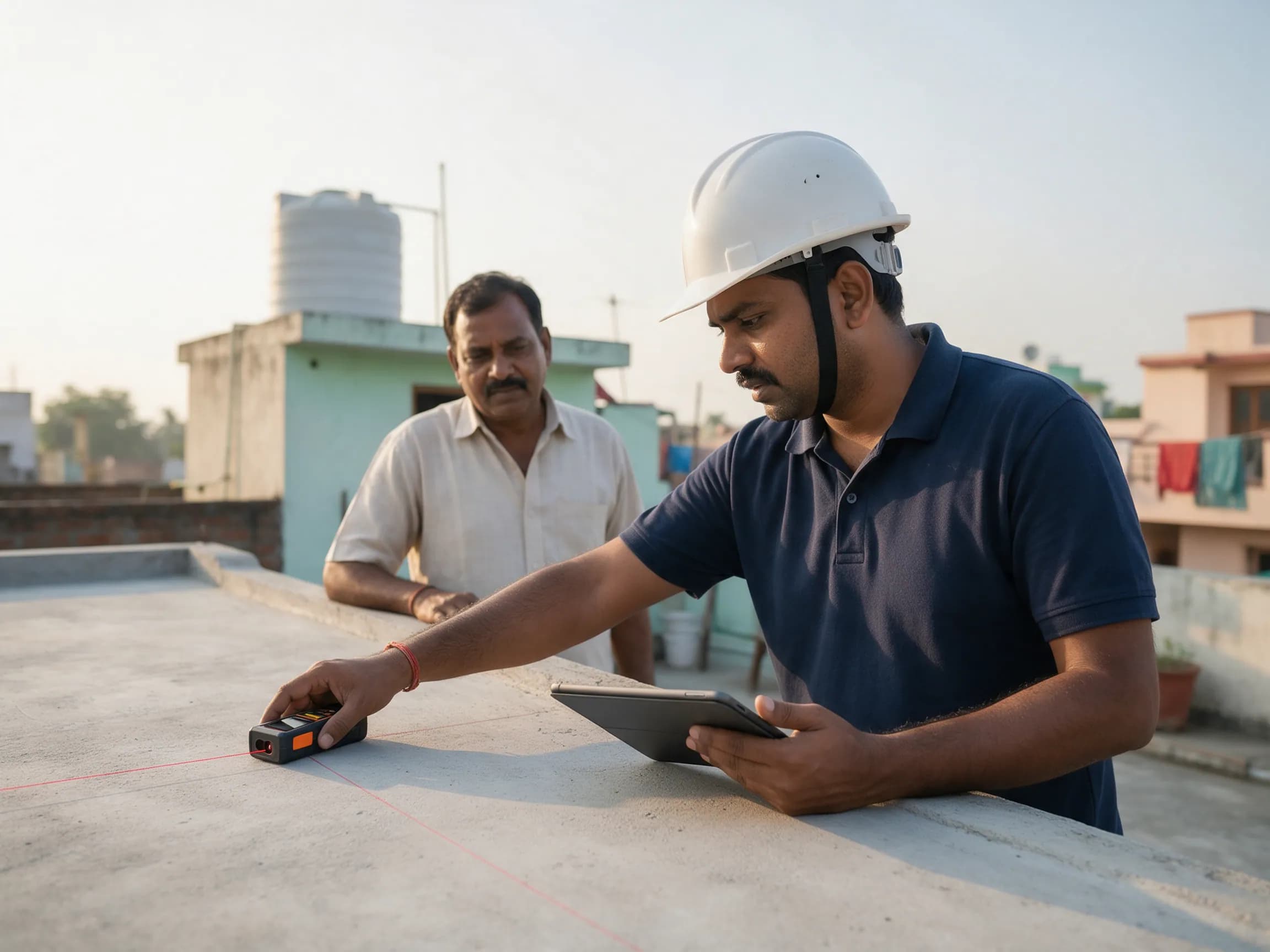 DAY 1
Certified solar engineer inspects roof orientation, shadow-free area, DISCOM sanction, and structural load feasibility.
 DAY 2–4
Custom 3D CAD layout with shadow analysis, expected monthly kWh generation, and transparent turnkey BOQ pricing.
 WEEK 2–3
Complete liaison for DHBVN/UHBVN bi-directional meter sanction and PM Surya Ghar national portal DBT subsidy filing.
 30 YEARS
Live mobile app telemetry, 30-year panel warranty, 10-year inverter warranty, and 5 years complimentary maintenance.
Verified Customer Reviews
Hear directly from families and commercial proprietors across Haryana who switched to rooftop solar with GR Enterprises and slash their electricity bills by up to 90%.
“Our 250 kW rooftop plant paid back in just over three years. The generation data matches the proposal they gave us, and their O&M team visits every quarter without us asking.”
“Power cost is a big line item for a clinic. The 40 kW system brought it down sharply, and the hybrid backup keeps critical equipment running during outages.”
For decision-makers
Every commercial proposal from GR Enterprises includes a load analysis from your last 12 months of bills, a shadow analysis and engineering layout of the roof, a month-by-month generation forecast, an itemised bill of materials with panel and inverter makes, and a cash-flow model showing payback, IRR and 30-year savings under each financing option.
We also include structural stability calculations, DISCOM net-metering or gross-metering feasibility, and a draft O&M plan with response-time commitments, so your finance, facilities and management teams can review one complete document.
*Tax benefits depend on current law and your company's situation. Please confirm with your chartered accountant.
Solar Knowledge Base
Clear, transparent answers about PM Surya Ghar central subsidies, DHBVN/UHBVN net-metering approvals, storm-tested mounts, and 30 years performance warranty.
A residential on-grid system typically costs ₹55,000–₹70,000 per kW before subsidy, depending on panel technology, structure height and roof type. After the PM Surya Ghar subsidy, a 3 kW home system usually costs ₹1.1–1.4 lakh. Commercial systems above 50 kW cost less per kW because of scale.
Most homes cut their electricity bill by 80–95%. A 1 kW system generates about 4–5.5 units a day depending on your city, so a 3 kW system produces roughly 360–480 units a month.
Divide your average monthly units (kWh) by 120 to get a rough system size in kW. For example, a home using 360 units a month needs about 3 kW. Our engineer confirms the final size after a free rooftop survey that checks shadow-free area and sanctioned load.
About 80–100 sq ft of shadow-free area per kW. A 3 kW system needs roughly 250–300 sq ft. Elevated structures let you keep using the terrace underneath.
Physical installation takes 1–3 days for homes. The full timeline, including design, DISCOM approval and net-meter installation, is usually 3–6 weeks depending on your electricity board.
An on-grid system shuts down during a grid outage for the safety of line workers. If you need backup, we recommend a hybrid system with batteries that keeps essential loads running.
Tier-1 panels carry a 25–30 year performance warranty, inverters 5–10 years, and our installation workmanship is covered for 5 years. We also offer an annual maintenance plan with cleaning and health checks.
Yes. We work with banks and NBFCs for solar loans with tenures of up to 5–7 years, often with an EMI lower than your current electricity bill. Ask for the EMI option during your consultation.
Yes. We use corrosion-resistant hot-dip galvanised structures designed for wind speeds of up to 150 km/h. Mounting uses chemical anchoring or ballast so we never compromise waterproofing.
With commercial tariffs of ₹9–11 per unit, most businesses recover their investment in 3–4 years. After that, the plant generates practically free electricity for 20+ years.
Local Service Footprint
Our localized field engineers coordinate directly with UHBVN and DHBVN subdivision offices to fast-track net-metering approvals, site inspections, and meter synchronization across these cities and surrounding villages.
DISCOM: UHBVN (Uttar Haryana Bijli Vitran Nigam)
Hubs & Villages Covered:
DISCOM: UHBVN (Uttar Haryana Bijli Vitran Nigam)
Hubs & Villages Covered:
DISCOM: UHBVN (Uttar Haryana Bijli Vitran Nigam)
Hubs & Villages Covered:
DISCOM: UHBVN (Uttar Haryana Bijli Vitran Nigam)
Hubs & Villages Covered:
DISCOM: UHBVN (Uttar Haryana Bijli Vitran Nigam)
Hubs & Villages Covered:
DISCOM: UHBVN (Uttar Haryana Bijli Vitran Nigam)
Hubs & Villages Covered:

Share your details and we'll schedule a site visit within the week.
What happens during your site survey?
An engineer visits your property to inspect solar irradiance, roof orientation, and usable shadow-free terrace area.
Transparent monthly generation forecast, Tier-1 equipment specifications, and payback model without hidden markups.
From submitting net-metering applications to coordinating DISCOM inspections and subsidy release — we manage everything.