
On-grid
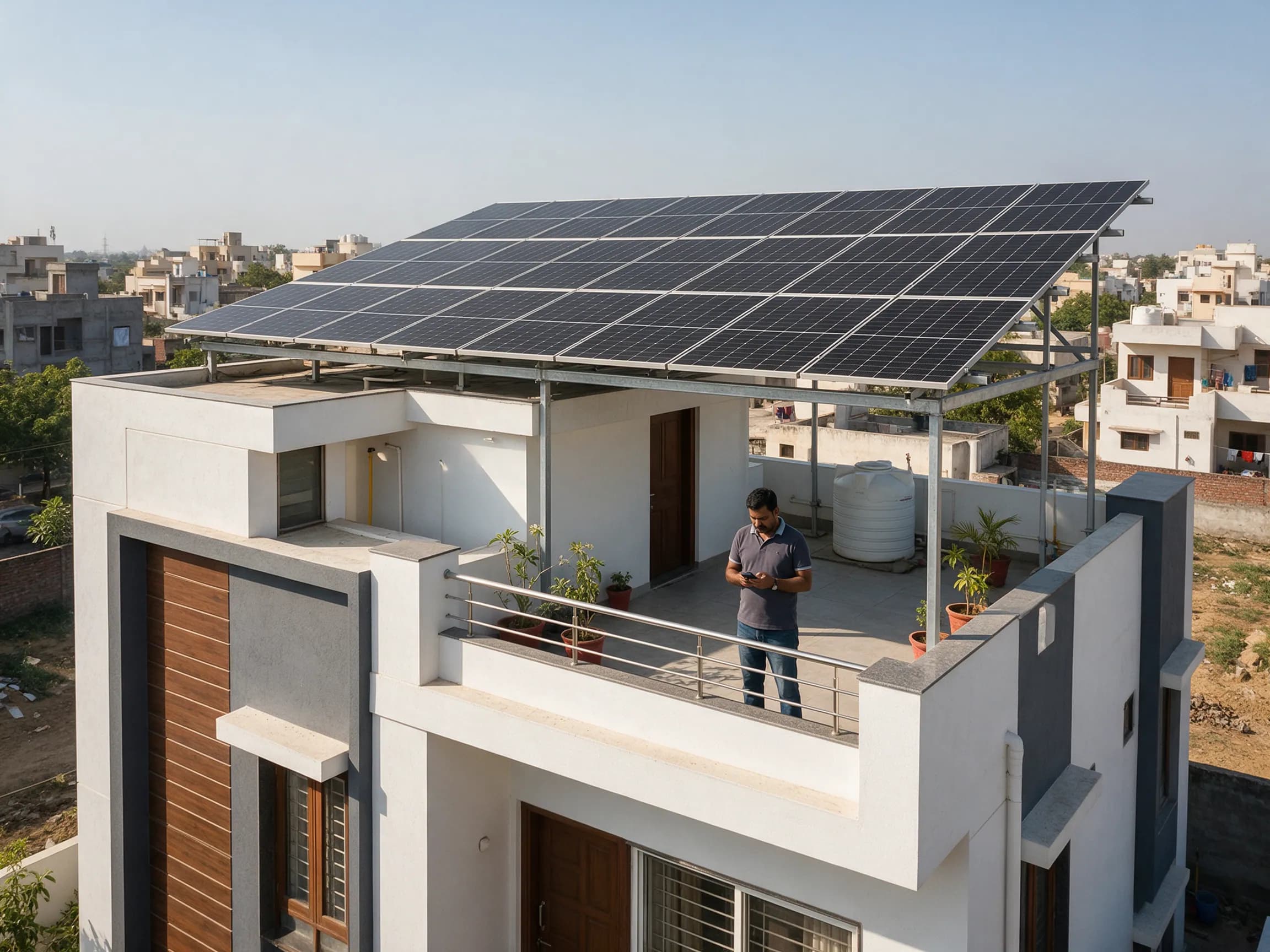
Most popularBest for: City homes with reliable grid power that want the lowest bill and subsidy eligibility.
- Lowest cost per unit generated
- Eligible for PM Surya Ghar subsidy
- Extra units exported via net-metering
- No battery maintenance
Solar for homes · B2C
A solar engineer will call you within one working day.
System types
Best for: City homes with reliable grid power that want the lowest bill and subsidy eligibility.
Best for: Areas with frequent power cuts, or homes that want backup for essential loads.
Best for: Farmhouses and sites without a reliable grid connection.
Move the slider to match your average monthly power bill and instantly see your recommended system size, subsidy, and lifetime returns.
4.5kW
300 sq ft
Module Count9 × 550 W
Government Subsidy Schedule
Under the Government of India's PM Surya Ghar: Muft Bijli Yojana, residential homeowners receive substantial financial assistance. As an authorized MNRE channel partner, GR Enterprises coordinates your national portal registration, DISCOM net-meter inspection, and Direct Benefit Transfer (DBT) release.
| SYSTEM CAPACITY | CENTRAL SUBSIDY | RECOMMENDED BILL RANGE |
|---|---|---|
| 1 kW | ₹30,000 | ₹800 – ₹1,500 |
| 2 kW | ₹60,000 | ₹1,500 – ₹2,500 |
| 3 kW | ₹78,000 | ₹2,500 – ₹4,000 |
| 3 kW and above - 10 kW | ₹78,000 | Above ₹4,000 |
Turnkey Engineering Protocol
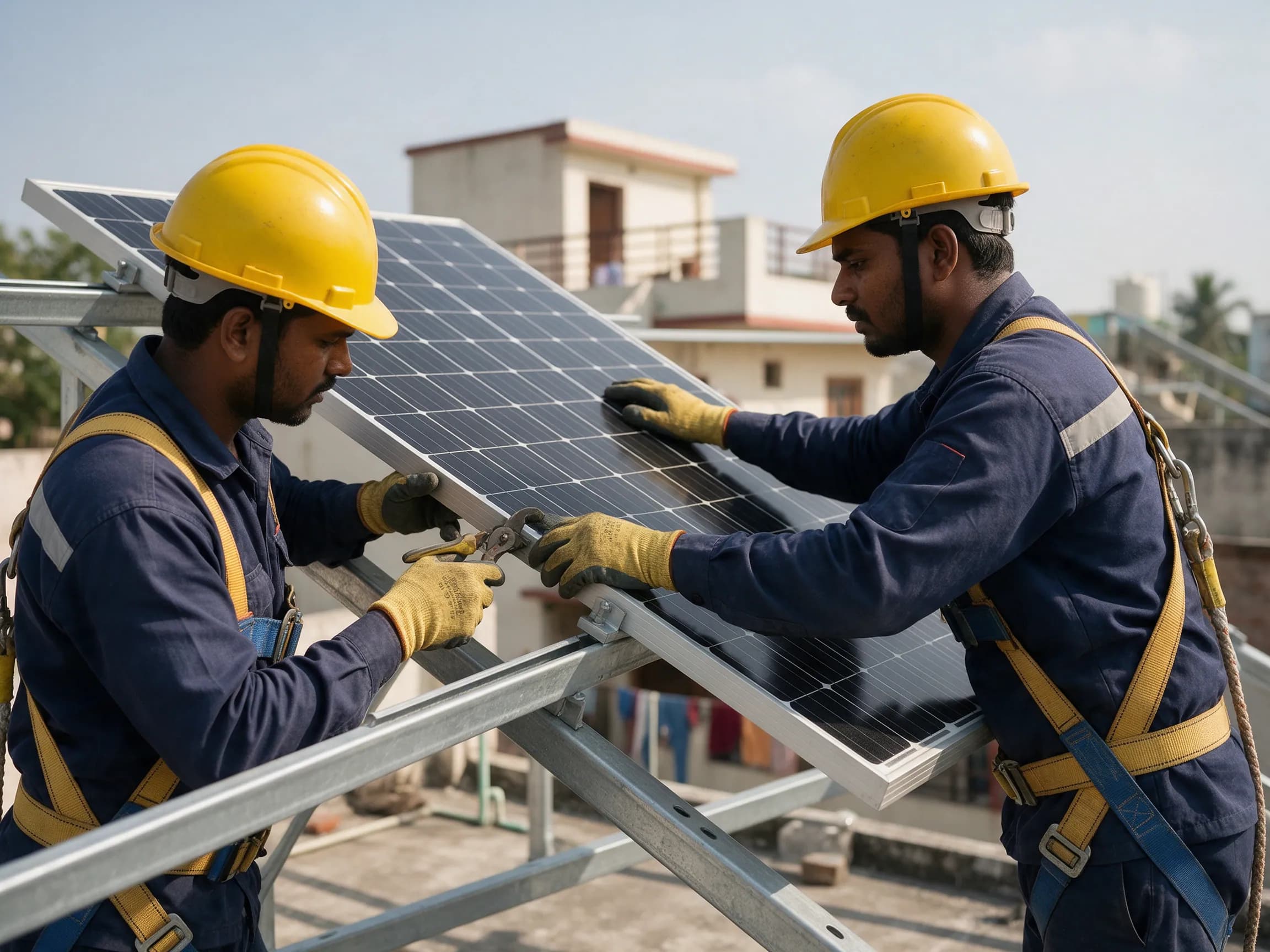
Every installation follows strict MNRE guidelines with zero-leakage chemical anchoring and certified wind-speed structures.
 DAY 1
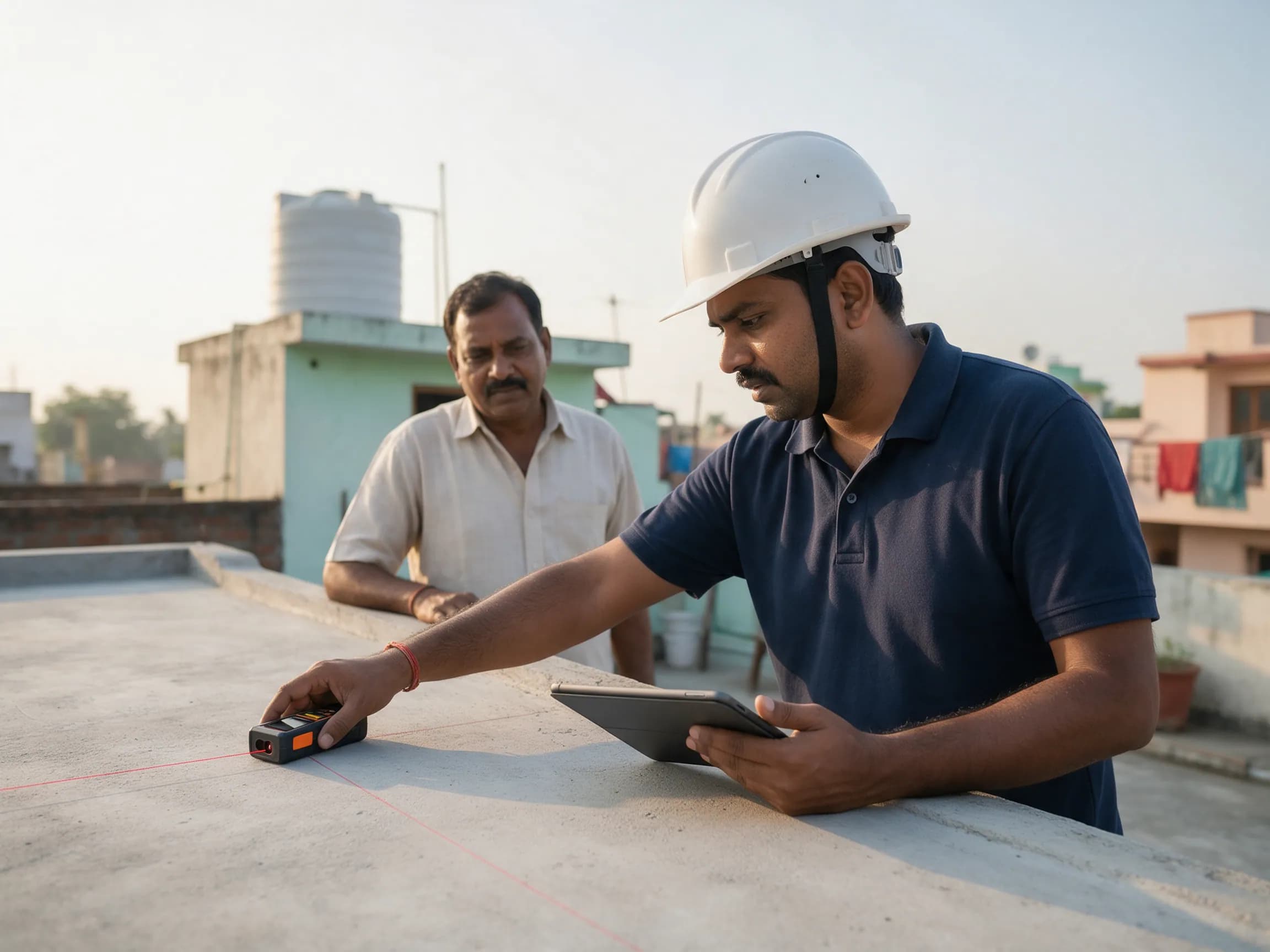
Certified solar engineer inspects roof orientation, shadow-free area, DISCOM sanction, and structural load feasibility.
 DAY 2–4
Custom 3D CAD layout with shadow analysis, expected monthly kWh generation, and transparent turnkey BOQ pricing.
 WEEK 2–3
Complete liaison for DHBVN/UHBVN bi-directional meter sanction and PM Surya Ghar national portal DBT subsidy filing.
 30 YEARS
Live mobile app telemetry, 30-year panel warranty, 10-year inverter warranty, and 5 years complimentary maintenance.
Verified Customer Reviews
Hear directly from families and commercial proprietors across Haryana who switched to rooftop solar with GR Enterprises and slash their electricity bills by up to 90%.
“The team showed me the 3D design before anything was drilled. Installation took two days, the subsidy reached my account in six weeks, and my summer bill dropped from ₹6,800 to ₹420.”
“I'd heard subsidy paperwork was a nightmare. GR filed everything on the portal and kept me updated on WhatsApp at every step. We got the central and the UP state subsidy.”
Buying guide
A typical 3 kW on-grid rooftop system costs about ₹1.8–2.1 lakh before subsidy. After the PM Surya Ghar subsidy of ₹78,000, the net cost falls to roughly ₹1.1–1.4 lakh. It generates about 360–450 units a month, enough for a home with a ₹2,500–₹4,000 monthly bill.
The final price depends on three things: panel technology (mono PERC vs TOPCon/bifacial DCR modules), structure height (a standard rooftop mount vs an elevated structure that keeps your terrace usable) and inverter brand. We share a fixed, itemised quote after the free site survey, and nothing is added later.
Take your average monthly units from the last 12 bills and divide by 120. That gives an approximate system size in kW. For example, 480 units a month means a 4 kW system. Our engineer refines this after checking your shadow-free roof area and sanctioned load.
Solar Knowledge Base
Clear, transparent answers about PM Surya Ghar central subsidies, DHBVN/UHBVN net-metering approvals, storm-tested mounts, and 30 years performance warranty.
A residential on-grid system typically costs ₹55,000–₹70,000 per kW before subsidy, depending on panel technology, structure height and roof type. After the PM Surya Ghar subsidy, a 3 kW home system usually costs ₹1.1–1.4 lakh. Commercial systems above 50 kW cost less per kW because of scale.
Most homes cut their electricity bill by 80–95%. A 1 kW system generates about 4–5.5 units a day depending on your city, so a 3 kW system produces roughly 360–480 units a month.
Divide your average monthly units (kWh) by 120 to get a rough system size in kW. For example, a home using 360 units a month needs about 3 kW. Our engineer confirms the final size after a free rooftop survey that checks shadow-free area and sanctioned load.
About 80–100 sq ft of shadow-free area per kW. A 3 kW system needs roughly 250–300 sq ft. Elevated structures let you keep using the terrace underneath.
Physical installation takes 1–3 days for homes. The full timeline, including design, DISCOM approval and net-meter installation, is usually 3–6 weeks depending on your electricity board.
An on-grid system shuts down during a grid outage for the safety of line workers. If you need backup, we recommend a hybrid system with batteries that keeps essential loads running.
Tier-1 panels carry a 25–30 year performance warranty, inverters 5–10 years, and our installation workmanship is covered for 5 years. We also offer an annual maintenance plan with cleaning and health checks.
Yes. We work with banks and NBFCs for solar loans with tenures of up to 5–7 years, often with an EMI lower than your current electricity bill. Ask for the EMI option during your consultation.
Yes. We use corrosion-resistant hot-dip galvanised structures designed for wind speeds of up to 150 km/h. Mounting uses chemical anchoring or ballast so we never compromise waterproofing.
On-grid is best for most city homes with reliable power: it is the cheapest, qualifies for subsidy and uses net-metering. Hybrid adds battery backup for frequent outages. Off-grid suits locations without a grid connection.
Local Service Footprint
Our localized field engineers coordinate directly with UHBVN and DHBVN subdivision offices to fast-track net-metering approvals, site inspections, and meter synchronization across these cities and surrounding villages.
DISCOM: UHBVN (Uttar Haryana Bijli Vitran Nigam)
Hubs & Villages Covered:
DISCOM: UHBVN (Uttar Haryana Bijli Vitran Nigam)
Hubs & Villages Covered:
DISCOM: UHBVN (Uttar Haryana Bijli Vitran Nigam)
Hubs & Villages Covered:
DISCOM: UHBVN (Uttar Haryana Bijli Vitran Nigam)
Hubs & Villages Covered:
DISCOM: UHBVN (Uttar Haryana Bijli Vitran Nigam)
Hubs & Villages Covered:
DISCOM: UHBVN (Uttar Haryana Bijli Vitran Nigam)
Hubs & Villages Covered:
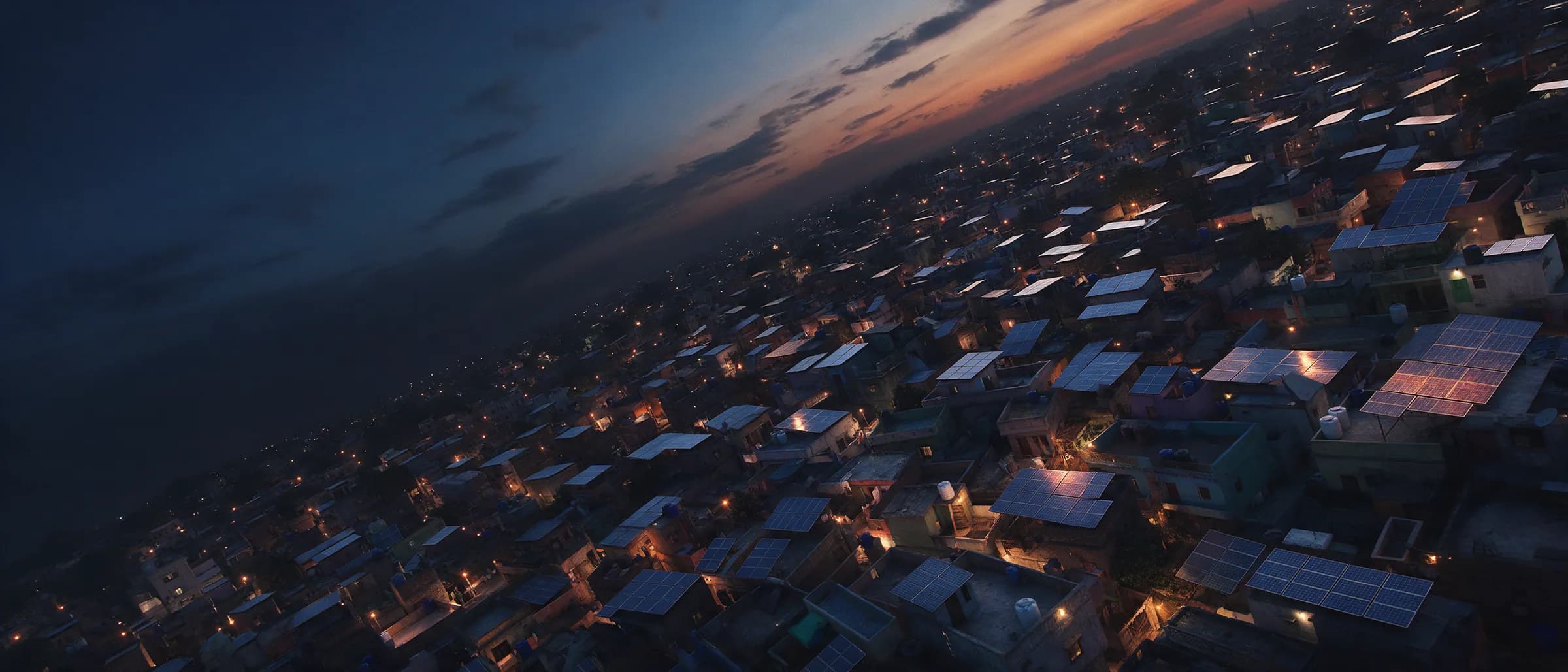
Our solar engineers will inspect your rooftop, prepare an accurate generation report, and calculate your exact PM Surya Ghar subsidy — with zero sales pressure.
What happens during your site survey?
An engineer visits your property to inspect solar irradiance, roof orientation, and usable shadow-free terrace area.
Transparent monthly generation forecast, Tier-1 equipment specifications, and payback model without hidden markups.
From submitting net-metering applications to coordinating DISCOM inspections and subsidy release — we manage everything.