BUSINESS · 8 MIN READ
Commercial solar ROI: a CFO's guide to payback, IRR and financing
How to evaluate a commercial rooftop solar investment: payback, IRR, depreciation benefits, and how CAPEX, loan and RESCO models compare.
By GR Enterprises Engineering Team ·
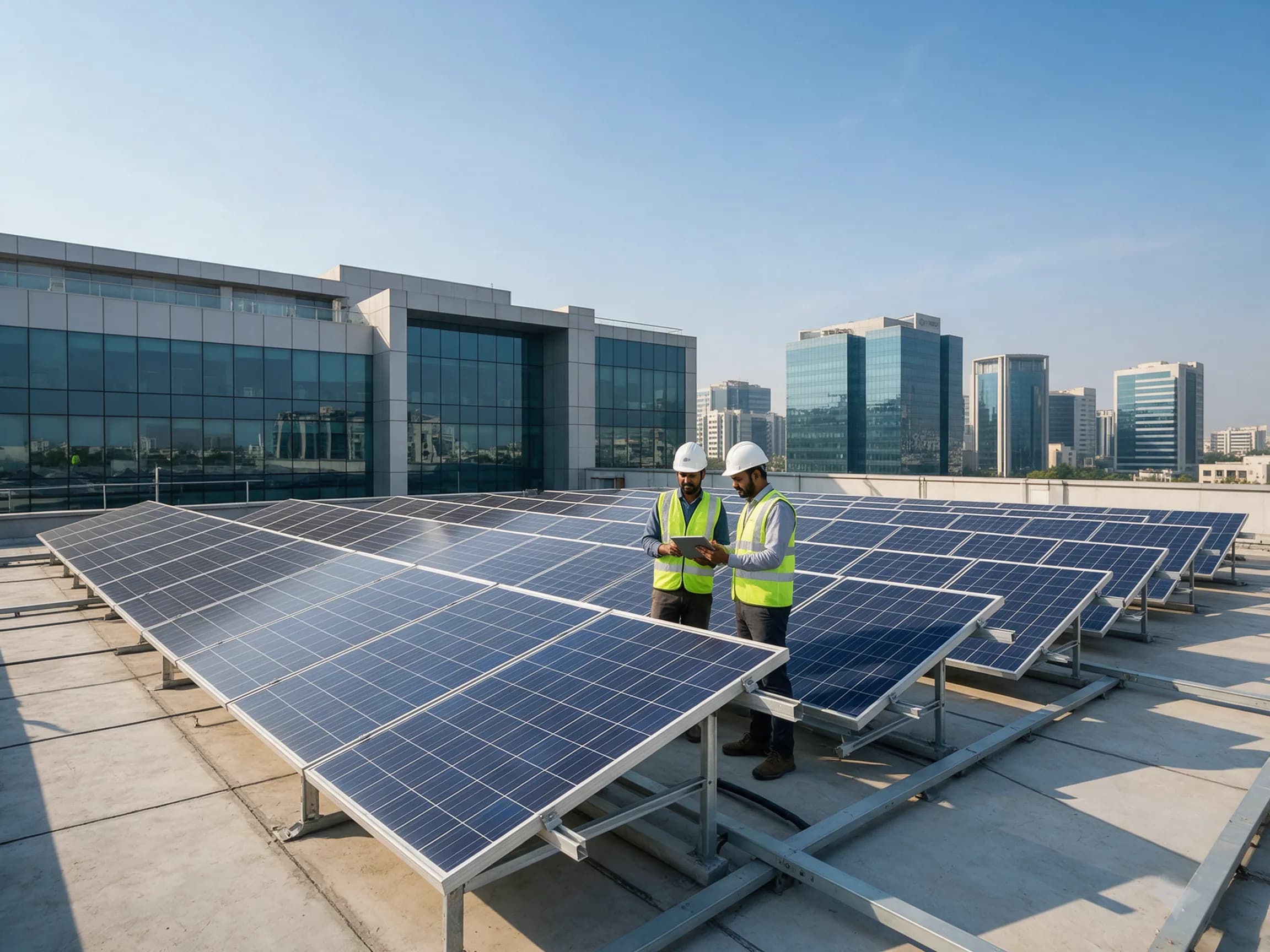
For most Indian businesses, electricity is one of the three largest operating costs. Rooftop solar turns part of that variable expense into a fixed, depreciable asset. Here's how to evaluate the investment the way your finance team will.
The core numbers
For a typical 100 kW commercial rooftop plant:
| Metric | Typical value |
|---|---|
| Project cost (CAPEX) | ₹45 – ₹55 lakh |
| Annual generation | 1.3 – 1.5 lakh units |
| Grid tariff replaced | ₹9 – ₹11 per unit |
| Annual savings | ₹13 – ₹16 lakh |
| Simple payback | 3 – 4 years |
| Project IRR (25 yrs) | 22 – 30% |
These depend on your tariff, roof, and how much of the generation you consume on site.
Depreciation can improve returns further
Solar assets have historically qualified for accelerated depreciation under the Income Tax Act, which brings forward tax savings and lowers your effective cost. Rates and eligibility change, so check the current position with your chartered accountant before you finalise the investment.
Comparing financing models
CAPEX (outright purchase)
You pay for the plant and own it. This gives the highest lifetime savings and the tax benefits. It suits profitable businesses with available capital.
Solar loan
Banks and NBFCs finance 70–80% of the project. In many cases the monthly EMI is lower than the monthly saving, so the project is cash-flow positive from the first month.
RESCO / PPA (zero investment)
A developer installs and owns the plant on your roof. You buy the power at a fixed tariff below your grid rate, typically for 15–25 years. There's no capex, the savings start immediately, and the developer handles O&M. This model usually requires loads of 100 kW or more and a creditworthy offtaker.
What to ask any EPC vendor
- Is the generation estimate based on a PVsyst simulation for my site?
- Is there a generation guarantee, and what is the compensation if the plant falls short?
- What are the exact makes and models of panels, inverters and structures?
- What is the O&M scope, and what is the breakdown response time?
- Who handles DISCOM approvals and the timelines?
Want a site-specific cash-flow model? Request a commercial proposal.